
Events and exhibitions
We invite you to be an active part of our vibrant creative community.
Explore our events and exhibitions
An education in art goes beyond building knowledge and technical skills, it’s about finding one’s voice, igniting curiosity, connecting with others, making meaning of the present and discovering a place in the world. It is important to celebrate successes together because the experiences and relationships one creates here will inform the rest of their life.
ASU Events
Exhibitions
PLAZA | MFA Exhibtion
Oct 16–31 | Step Gallery
Opening reception | Oct 16 | 6–9 p.m.
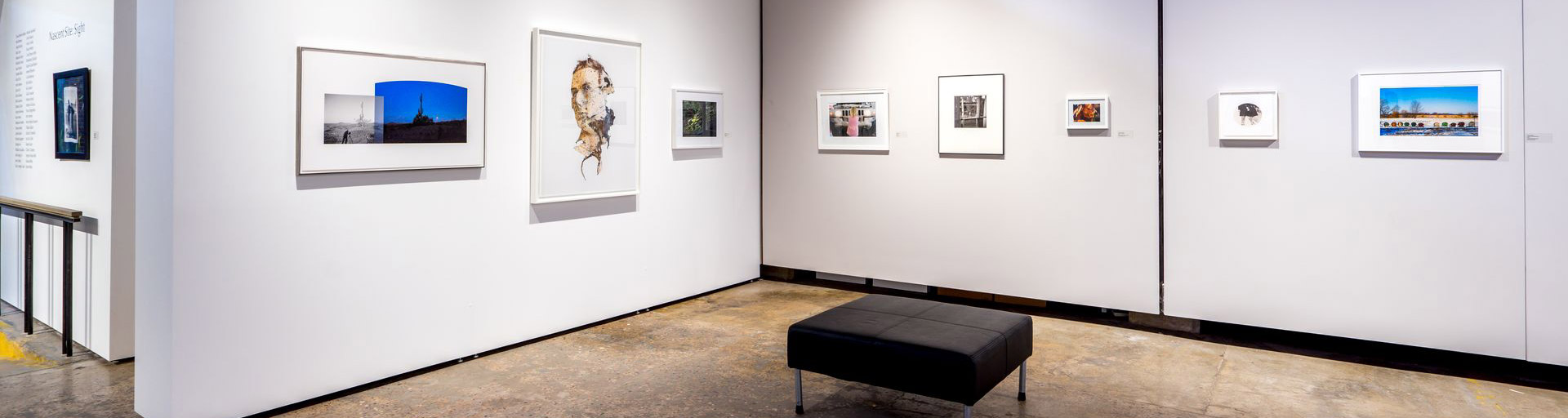
PLAZA is a meeting ground. This traveling exhibition unites photography artists from the University of Arizona in Tucson & Arizona State University in Tempe-Phoenix. Artists were invited to reflect on their relationship to place in regards to belonging, meeting, ancestral roots and isolation; artists were encouraged to reflect on the idea of what it can mean to feel at home in a place or between places.
Curated by Marcus Xavier Chormicle and Oscar Montes.

Anatomy of a Swarm
Oct 14–Nov 5 | Harry Wood Gallery
Opening reception | Oct 14 | 5–7 p.m.
Bugs and bodies, few subjects offer as strange and fertile a connection to human sexuality as the insect world does. Coming to Harry Wood Gallery, “The Anatomy of a Swarm” explores preconceived notions about sexuality, gender and embodiment through the lens of the insect world. By decentering the human perspective and embracing arthropods, creatures known for their alien anatomies, social structures and reproduction, the show reframes taboo topics like STIs, queerness, sexual trauma and asexuality within symbolic and scientific frameworks. This approach allows artists to explore the sexual experience through perspectives that merge biology, identity, humor and trauma. Participating artists engaged with fields such as entomology, gender theory, disability studies and new media to develop work that is both academically rigorous and emotionally resonant.
Participating artists: Rozano Rivolta, Juno Pfieff, Daniel Decamps, V Stolarski, Avery Collins, Claire Chilton, Sonora Grace Wright, Grace Balzer, Kieren Lund, Mick Burrage

Figuratively Speaking | BFA Exhibition
Nov 3–12 | Gallery 100
Opening reception | Nov 3 | 5–7 p.m.
Gallery 100 is pleased to present “Figuratively Speaking”, a group exhibition featuring seven artists working across illustration, painting, photography and sculpture. The exhibition brings together works that explore natural figures in their many forms and lore: human, symbolic and the unsettling.
Through distinct materials and visual languages, the artists examine the body, landscape, memory, transformation and the uncanny. Some works draw from the recognizable world of flesh, flora and terrain, while others move into stranger territory, where figures appear altered, symbolic, dreamlike, adventurous or haunting. Together, the exhibition considers how nature and imagination shape our understanding of beauty, discomfort and the unknown.
Featuring works by Ian Amaya, Nicolette Berlan, Joe Denzak, Rachel Harris, k’Atri RoxiAni, Cristina Torres, Sierra Vannelli, “Figuratively Speaking” highlights a range of contemporary approaches to figuration. Illustrations, paintings, photographs and sculptural works are placed in conversation to reveal shared concerns with form, presence, mythology and the emotional charge of the natural world.
Image courtesy of the artists.

The Revolutionary Idea: a window on voting in America
Oct 16–Nov 14 | Northlight Gallery
Opening reception | Oct 16 | 6–9 p.m.
Inspired by Frederick Douglass’s 1852 speech, “What to the Slave Is the Fourth of July?,” The Revolutionary Idea brings together the work of Anna Rotty and Greg Miller, two photographers who independently turned their attention to the people and spaces that make elections possible. Through photography, audio, printmaking and found materials, their work considers the voters, poll workers and election officials whose collective labor sustains our democratic process.
Image Credit: Greg Miller

(UN) NOTICED | MA Thesis Exhibition
Nov 9–20 | Harry Wood Gallery
Opening reception | Nov 10 | 5–7 p.m.
“(Un) Noticed” is a solo graduate exhibition by Allie Thurgood, presented in the Harry Wood Gallery from November 9–20. The exhibition brings together ceramic and textile sculptures that transform familiar bags and everyday objects into larger-than-life forms that ask to be noticed.
The exhibition explores how the bags we encounter in everyday life can reflect human habits, patterns of consumption and the quiet interactions that shape everyday life. Used for carrying, storing, protecting and discarding, bags are often temporary objects that move through our lives without much attention. Thurgood recreates these familiar forms in ceramic and textile, using surface embellishment, exaggerated scale and bright colors to give them a new presence. The works draw from everyday experiences, including grocery shopping, gift-giving, travel, celebration and convenience, while considering the abundance, excess and expectations connected to these exchanges. By spending significant time and labor transforming disposable objects into enduring sculptures, Thurgood shifts their place in our lives from something easily overlooked to something that can be examined and valued.
“(Un) Noticed” asks viewers to pause and reconsider the ordinary objects that surround them, and to reflect on what they carry, why they carry it and how these objects can reveal something about the ways we live and interact with one another.
Image: “Seasonal Affection” | Porcelain, stoneware, mason stains, gold | 17" x 12" x 21"
